Why our measurements are trustworthy — proven by calibration
Numbers only count as evidence when they come from the right instruments, properly calibrated. Geonoise uses Norsonic-grade equipment calibrated by an ISO/IEC 17025 accredited laboratory and traceable to international standards.
Why calibration matters
Every sound level meter drifts over time. Without calibration, its numbers carry no weight as a reference.
Traceable calibration means measured values link back to national and international standards — that is what makes a report defensible in legal contexts, and what a phone app or uncalibrated meter cannot give you.
Our instruments
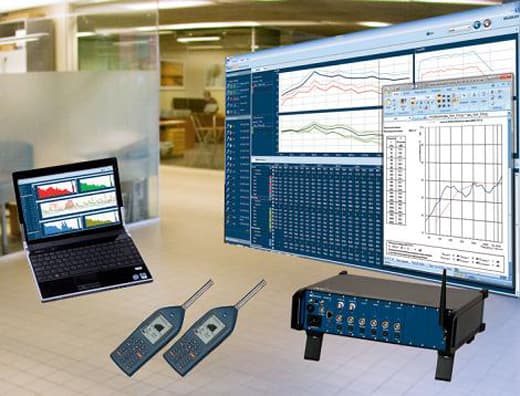
Norsonic Nor850 — multichannel sound & vibration analyser
A multichannel sound and vibration analysis system for field and laboratory measurement.
Class 1 sound level meter
A calibrated IEC 61672-1 Class 1 sound level meter, used for evidence-grade measurement.
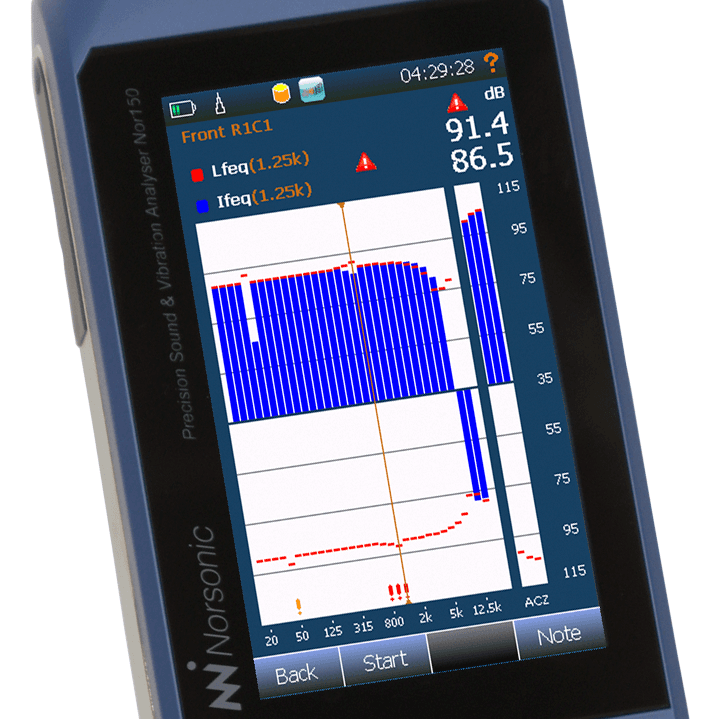
Norsonic Nor150 — sound analyser
A high-performance handheld analyser for environmental, building, and occupational noise.
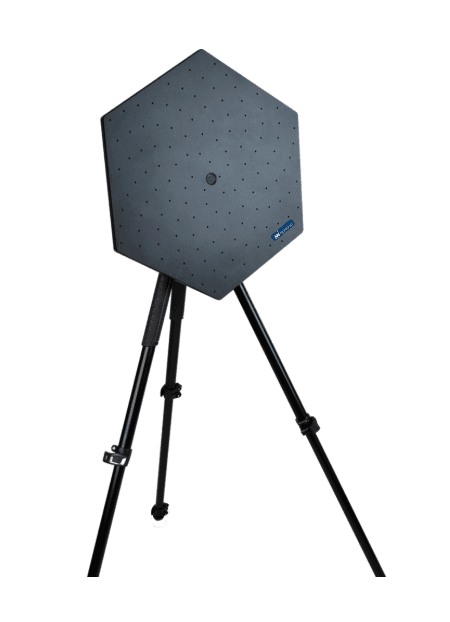
Norsonic Nor848B — 128-microphone hextile acoustic camera
A 128-channel hextile-array acoustic camera that shows in real time where the noise comes from, ranks the sources and verifies a fix before and after.
Calibration by an ISO/IEC 17025 accredited laboratory
Our instruments are calibrated by an ISO/IEC 17025 accredited laboratory, with certificates traceable to international standards, and evidence-grade measurement reports are issued by the ALT laboratory (Acoustic Laboratory Thailand) under its ISO/IEC 17025 accreditation.
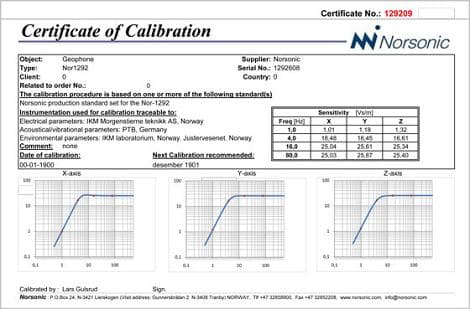
The certificate below is a real example of a Norsonic instrument calibration, traceable to national metrology institutes.
Standards we work to
Every measurement and report references the relevant international standards:
- IEC 61672-1 Class 1 — sound level meter specification
- ISO/IEC 17025 — competence of the laboratory that calibrates our instruments
- ISO 16283-1/-2 — field sound-insulation testing
- ISO 1996 — environmental noise measurement and assessment
- ISO 9613-2 — outdoor sound propagation calculation
- ISO 3382 — reverberation and STI measurement